Few home styles are as instantly recognizable as the Craftsman, and the windows do most of that work. A true Craftsman window reads from the curb in a second: a clear lower pane, an upper sash split into tall vertical sections, and a frame wrapped in wide, honest wood trim. The pattern grew out of the early-1900s Arts and Crafts movement, which prized natural materials and clean geometry over fussy Victorian ornament.
Whether you own an original 1920s bungalow or you are building new and want the look, the details are what sell it. This guide covers the signature grille pattern, the window styles that suit the home, trim and color choices, and the mistakes that quietly turn a Craftsman house into something else. If you are weighing a full window project, our team handles new window and door installation across the Columbus and Cincinnati area.
Quick answer: Craftsman style windows are usually double-hung units with a plain lower sash and an upper sash divided by vertical grilles, set in wide wood trim. Common patterns are four-over-one and six-over-one, and authentic homes favor natural wood and earthy colors over white vinyl.
What Makes a Window Look Craftsman
The Craftsman look is a set of proportions, not a single window shape. It came out of the American Arts and Crafts movement of the early twentieth century, a reaction against mass-produced Victorian decoration. The idea was simple: show the materials honestly, keep the lines straight, and let craftsmanship stand in for ornament. Windows became one of the clearest places to read that philosophy.
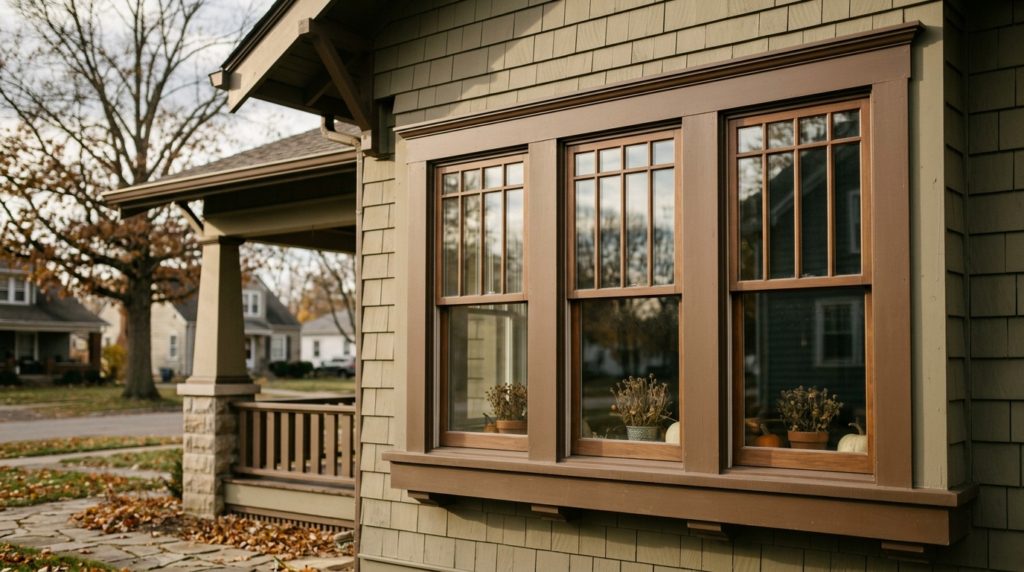
Three things give a Craftsman window away. First, the glass is divided in the top sash but left open in the bottom, so you get pattern up high and a clear view at eye level. Second, the dividers run vertically, with no horizontal bars crossing them, which keeps the eye moving upward. Third, the whole unit sits inside broad, flat trim that frames it like a picture rather than disappearing into the wall.
Get those three right and almost any window can carry the style. Miss them, and a brand-new window in an otherwise perfect bungalow will look subtly wrong, even to people who cannot say why.
The Signature Grille Pattern
If there is one detail that defines the style, it is the grille pattern in the upper sash. The classic configurations are four-over-one and six-over-one: four or six tall panes stacked across the top sash, sitting above a single uninterrupted pane below. The bars dividing those panes are called muntins or grilles, and on a Craftsman window they run straight up and down.
What you will not see is a grid. Colonial and Federal homes use windows split into small squares with both vertical and horizontal bars, and dropping that pattern onto a Craftsman house is the fastest way to break the look. The Arts and Crafts eye wanted vertical movement that echoed tree trunks and stalks of wheat, so the horizontals were left out on purpose.
On a replacement window you can get this look three ways: true divided lites with real wood bars between separate panes, simulated divided lites with bars permanently fixed to both glass surfaces, or grilles sealed between the panes for easy cleaning. Our guide to window grids and grilles walks through how each option looks and holds up over time.
Window Styles That Fit a Craftsman Home
Double-hung windows are the backbone of the style, and most original bungalows are filled with them. They suit the vertical grille pattern, they ventilate from the top or bottom, and they were the standard sash type when these homes were built. If you are matching the look of a single feature, a double-hung is the safe default.
But a Craftsman house is rarely all one window. Designers mixed in several shapes to add interest while keeping the trim consistent, and you can do the same. Common companions include:
- Casement windows that crank outward, often carrying the same vertical muntins in the upper portion.
- Picture windows used as a fixed center pane, flanked by two operating double-hungs to form a feature group.
- Transom windows set above a door or a larger window to pull in extra light.
- Small accent windows, square or filled with art glass, tucked into stairwells, gables, or beside a fireplace.
The trick is to let the trim and grille pattern tie the mix together. For a fuller rundown of how each shape behaves, see our overview of window types and styles.
The Rule of Three and Window Groupings
Craftsman design leans on symmetry, and windows are often grouped in threes. A typical arrangement places a wide fixed or picture window in the center with a narrower double-hung on each side, the middle unit about a third larger than its neighbors. The grouping reads as one balanced composition rather than three separate holes in the wall.
Ribbon bands are another signature. Three or four windows set in a tight row, sharing a continuous header and sill, run along a porch front or a stair landing to flood the room with even light. The repetition is deliberate and calm, which is exactly the mood the style was after.
When you are planning a remodel or an addition, thinking in groups rather than single openings keeps the facade honest. A lone modern window dropped into a Craftsman wall almost always looks like an afterthought, while a balanced trio looks original even when it is brand new.
Wide Trim and Casing: Where the Look Lives
Ask a builder what makes a window look Craftsman and most will point at the trim before the glass. The style is defined by broad, flat casing on all four sides, usually topped with a thicker horizontal board called a header or cap. That header often carries a small projecting cornice or a drip cap, which throws a shadow line that gives the window weight.
At the bottom, a wide sill and a flat board beneath it, the apron, finish the frame. Inside, the same logic repeats: square-edged casing, a substantial stool, and corners that meet in butt joints rather than the mitered, molded edges you see in Colonial trim. The wood is meant to look sturdy and plainspoken.
This is good news for anyone updating an older home, because trim is easier to restore or rebuild than the windows themselves. Even a basic modern double-hung can read as Craftsman once it is wrapped in proper wide casing and a capped header.
Materials: Wood, Fiberglass, or Vinyl
Authentic Craftsman windows are wood, and the Arts and Crafts movement treated visible grain as part of the beauty. Original homes used quarter-sawn red or white oak for main-floor trim and sashes, along with mahogany and walnut where budgets allowed. If you are restoring a historic bungalow, wood keeps the home true to itself and accepts a stain that shows the grain.
Wood does ask for upkeep, though, and that matters in this climate. Ohio’s freeze-thaw swings and humid summers are hard on exposed sashes, and an original single-pane wood window left unmaintained will eventually rot at the sill. That is where modern materials earn their place.
- Wood is the most authentic and the most maintenance, ideal for restorations and stained interiors.
- Fiberglass holds paint well, resists warping through temperature swings, and can be milled with crisp Craftsman profiles.
- Vinyl is the budget option and the hardest to make look authentic, though darker exterior colors and applied grilles help.
The right call depends on whether you are preserving a period home or simply borrowing the style for a newer build, where a low-maintenance material makes more sense.
Colors, Finishes, and Art Glass
Color is where a Craftsman home shows its roots in nature. The palette runs to earth tones: muted greens, warm browns, ochres, and brick reds, often with a deeper trim color framing a softer wall field. White is used sparingly, if at all, because the style wants windows that feel grounded rather than crisp and bright.
Inside, stained and clear-finished wood is the default. A natural stain that lets the oak grain show through suits the style far better than paint, and it ties the windows to the wood floors, beams, and built-ins that fill these homes. Where painted trim is used, it tends toward warm neutrals rather than stark white.
Art glass is the style’s flourish. Stained or leaded glass with stylized natural motifs, think trees, vines, wheat, or simple geometric diamonds, often appears in a transom, a stairwell window, or the small panes flanking a front door. Used in one or two spots rather than everywhere, it reads as handcrafted detail instead of decoration for its own sake.
Restoring or Replacing in an Older Ohio Home
Central Ohio has no shortage of original Craftsman bungalows and American Foursquares, and their windows are often the first thing a new owner wants to address. The honest answer is that many original wood double-hungs are worth saving. The wood milled a century ago is denser than most new lumber, and a sash with peeling paint and a broken cord usually needs restoration, not the landfill.
On older Columbus homes we open up every season, the original sashes are frequently in better shape than the owner expects. A frayed sash cord and stuck paint look like failure, but the wood underneath is often solid. The drafts almost always come from worn weatherstripping and gaps around the frame, not the window being shot.
That said, original single-pane glass cannot match a modern insulated unit through an Ohio winter. If comfort and energy bills are the priority, the goal is to keep the look while upgrading the performance: a wood or fiberglass replacement with the correct vertical grille pattern, a Low-E coating, and an insulated glass unit. If your home leans more rural than Arts and Crafts, our guide to farmhouse window styles covers a related but distinct look.
Mistakes That Break the Craftsman Look
Most Craftsman windows that look wrong are not the victim of one big error but of a few small ones. Because the style depends on getting proportions and patterns right, the details that seem minor are the ones that give a home away. Run through the list below before you order anything.
None of these are about spending more. They are about matching the era’s logic instead of fighting it.
- Grid patterns with horizontal bars, which belong on Colonial homes and instantly read as the wrong style.
- Putting grilles on both sashes, when a true Craftsman leaves the lower pane clear.
- Skinny or missing trim, since the wide casing and capped header carry most of the look.
- Bright white vinyl on a historic facade, which clashes with the home’s earthy palette.
- Mismatched grille patterns, where one replacement window has a different bar layout than its neighbors.
Get the Craftsman Look Without Guesswork
Matching a century-old window pattern, choosing between restoration and replacement, and keeping the trim true to the style is a lot to weigh on your own. A short conversation with someone who works on these homes every week usually saves a costly wrong order.
Book a free, no-pressure window consultation with our Columbus and Cincinnati team, and get a straight answer on whether your originals are worth saving or a period-correct replacement is the smarter move.
FAQ: Craftsman Style Windows

Ready to fix your windows? Get a free quote in 30 seconds.
Family-owned, licensed & insured. Free, no-obligation quotes.